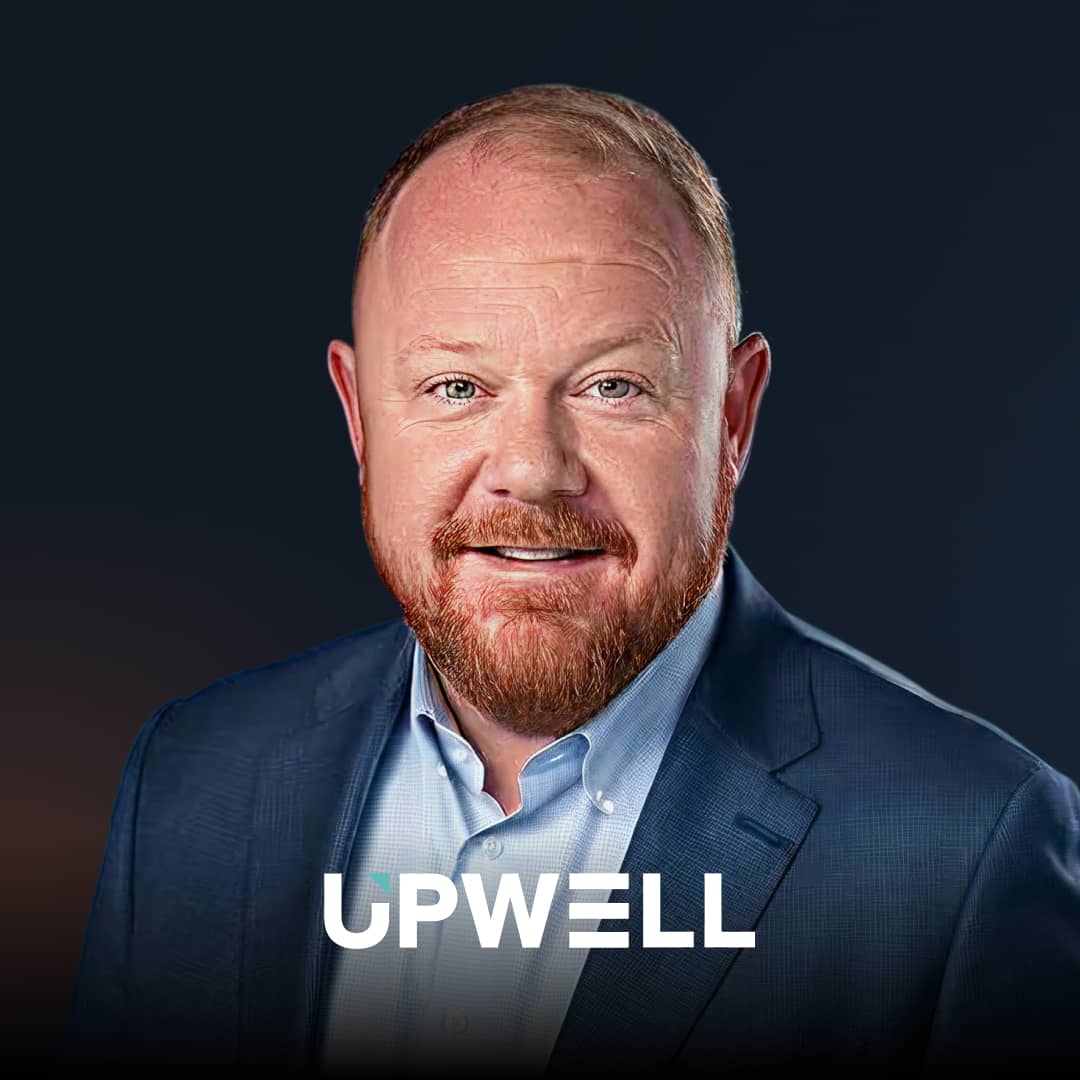
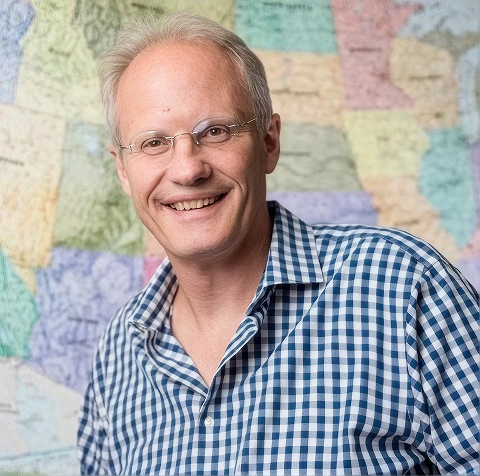
Russell Jones has started four companies across mobile accessories, home security, and freight, holds 10 patents, and has spent the last decade inside brokerage, digital freight matching, and private fleets. That combination gave him a view of the truckload market that almost nobody else has, and it pointed at the same number over and over: roughly 45% of trucks in the US belong to private or dedicated fleets, and those trucks run empty about 80% of the time on their backhauls.
In this episode, Russell explains why that inefficiency has stayed a blind spot for so long, what it takes to match a private fleet backhaul precisely enough that the fleet says yes, and how Private Fleet Net Zero recruited more than 60 fleets and 80,000 trucks in its first year. He also gets into founder market fit, why proprietary data beats a wrapper on someone else's model, and what the freight market looks like in ten years if this works.
About 45% of trucks in the US belong to private or dedicated fleets, the ones a company runs for itself rather than buying on the open market. Those trucks deliver a load, and then roughly 80% of the time they drive home empty.
Russell puts the wasted domestic capacity at about $150 billion. Nothing about closing that gap requires new trucks, new drivers, or new lanes. The freight exists, the equipment exists, and the miles are already being driven. What is missing is a way to match one to the other.
Most large private fleets would like to fill their backhauls. Few have invested seriously in doing it, and Russell explains why the math discourages them.
Roughly 20,000 shippers buy truckload capacity and roughly 25,000 freight brokers sit alongside them, which means 45,000 possible buyers and no single one of them representing more than a few percent of the market. Filling backhauls at scale means working all of them.
The second constraint is precision. A private fleet cannot drive hundreds of miles off route or wait six hours for freight to be ready, because missing the next head haul is the thing it actually cares about. A buying network larger than any individual buyer is what makes a precise match possible, and that is where Private Fleet Net Zero positions itself.
Russell spent a decade in brokerage and digital freight matching, then three to four years inside the private fleet world. He describes the intersection of the two as the thing almost nobody has seen from both directions.
That vantage point shortened everything. He had around 50 conversations before starting the company, walked into the National Private Truck Council conference and had 20 more in a single day, and used a decade of context to scope an MVP that demos well on the first try. In year one, the hardest year to recruit, the platform signed more than 60 fleets covering 80,000 trucks and 40,000 lanes, with buyers representing tens of billions in freight spend.
Private Fleet Net Zero uses AI to turn unstructured data into structured data, clean it, and support matching between trading partners. Russell is blunt about the limits of that as a business in itself.
Putting a skin around one of the big models leaves you starving for data. The durable version is proprietary data that few others hold, with AI applied on top to do something more efficiently than anyone has before. That is the camp he puts his company in.
Russell expects 20% to 25% of trucks to be autonomous within a decade, with private fleets more likely to adopt than a four-truck operation. He sees networks like his running thousands of matches a day, less fuel burned on empty miles, and expansion into Canada and Mexico before Europe and Asia.
He also draws the contrast that frames the whole conversation. The for-hire world is a red ocean where typical broker margins sit at 2% to 3% EBITDA. Matching private fleet backhauls is, for now, water nobody else is swimming in.
[00:00:00] Russell Jones: There are something like 45% of all the trucks are in private fleets or dedicated fleets. Those trucks are empty 80% of the time on their backhauls. This is a huge waste. We're talking order of magnitude, 150 billion dollars domestically of wasted capacity.
[00:00:16] Andrew Verboncouer: Welcome back to This Side Up, where we unpack the stories, strategies, and hard-earned lessons behind the people building the future of logistics and supply chain. Today, I'm joined by Russ Jones, founder of Private Fleet Net Zero. Russ has spent his career across logistics, digital freight matching, product, and private fleets, giving him a very unique perspective on an enormous inefficiency hiding in plain sight: private fleet trucks returning empty.
[00:00:42] Andrew Verboncouer: So in this episode, we'll talk about why private fleets run empty nearly 80% of the time on backhauls. We'll talk about the founder-market fit behind Private Fleet Net Zero and how Russ has really captured his unique point of view, both at a 3PL and also on the private fleet side of things. We'll also talk about how better data and precise freight matching can create an entirely new source of capacity without adding more trucks to the road, and why Russ keeps coming back to startups. So, thanks so much for joining us. Let's get into it.
[00:01:11] Russell Jones: I'm Russ Jones. I am the CEO of Private Fleet Net Zero and co-founder. This is my fourth company I have started. I have 10 patents, a Harvard MBA. I started my first company, it was a company called Clearbox Communications that pioneered the market for headsets for mobile phones.
[00:01:31] Russell Jones: That became a category winner. We were shipping millions of units. I had well over ten thousand retail locations. I sold that company to Plantronics. I then started up a company that pioneered the market for vision-based security systems for people that live in apartments. I then started up Cargo Chief, a tech-enabled freight brokerage that grew very quickly from zero to tens of millions of dollars.
[00:01:54] Russell Jones: And then in 2017, other brokers said they wanted to license my multi-patent and award-winning tech. That had Cargo Chief pivot to becoming a digital freight matching platform that services something like twelve hundred buyers, eight billion dollars of freight spend. And then I now lead Private Fleet Net Zero.
[00:02:12] Russell Jones: At a very high level, we're Match.com for private fleet backhaul capacity.
[00:02:16] Andrew Verboncouer: Awesome. Thanks, Russ. I'm so excited to dig into this today. Obviously, as we talked about in the intro...
[00:02:22] Russell Jones: You know a lot about our space, and mostly not everyone does.
[00:02:25] Andrew Verboncouer: I do, I do. I'm excited. You know, we met... you're in San Francisco now, or the company's based in the San Francisco Bay Area. We met in the unlikeliest of places in the Green Bay area, which I often tell people is the real Bay Area. Because we spend a lot of our time between the coasts, and it's always fun to meet. I think we met through the Generator cohort in their accelerator, and so I was excited to meet, one, not only founders from San Francisco coming to the Green Bay area, Appleton, Wisconsin, those sorts of things, but also doing similar things in freight that we've helped solve. It's just always interesting to understand how people are attacking the market and really what they see, right?
[00:03:06] Andrew Verboncouer: I think there's definitely benefit, especially in this age of AI, where you see what other people don't, and I think those sorts of opportunities are rare. And then being able to act on that opportunity and have some of your experience, as you mentioned, in some of your other companies, I'm sure, having private fleets, having things where it just became a no-brainer to you that this was a solution that could impact and help not only the bottom line, but also drive top-line results too for these companies.
[00:03:31] Andrew Verboncouer: And so I'm excited to dig in here a little bit, Russ, and like I said, appreciate you taking the time.
[00:03:37] Andrew Verboncouer: So I guess talk about, of all of your experience, you've built companies in communications, security, now logistics. What's really the common thread in all those problems that you see? We talked a little bit about private fleets. That's the obvious answer. What's the unobvious answer?
[00:03:53] Russell Jones: That's a good question. I have bounced around through industries. I think what gets me excited is when there's a large market that has a need, and it's easy to explain the need. You know, the first business, people need to use their mobile phone hands-free. That's easy. Everyone gets that. The second business, people need security for their loved ones that are in apartments.
[00:04:18] Russell Jones: Everyone gets that. Now what we're doing with Private Fleet Net Zero, the order of magnitude, there are something like 45% of all the trucks are in private fleets or dedicated fleets. Those trucks are empty 80% of the time on their backhauls. This is a huge waste.
[00:04:34] Russell Jones: We're talking order of magnitude, 150 billion dollars domestically of wasted capacity. And we're matching that capacity up with sophisticated buyers that want to take advantage of that capacity, enjoy a great service at a substantial discount to market.
[00:04:57] Andrew Verboncouer: Is there a specific moment you realized that? Obviously, like in brokerages, in other fleets that are maybe for-contract, it's obvious we need to optimize this backhaul. What was the moment you realized that?
[00:05:09] Russell Jones: I went to the National Private Truck Council Conference. It's a once-a-year show in May in Florida, and I went to it for the first time, had 20 conversations the first day and thought, "Oh my gosh, this is the best business opportunity of my career." I got really excited. And so that's where really I started off and started getting Private Fleet Net Zero going.
[00:05:32] Andrew Verboncouer: How'd you go from idea to first customer?
[00:05:35] Russell Jones: So I'm good at doing that. I've done that a number of times. So, I scoped out the size of the market by doing a bunch of research. I had maybe 50 conversations before starting the company, so I had a feel for the demand on both the fleet side and the buyer side. I've been working in the world of brokerage for a decade, so I understood deeply how brokers are.
[00:05:58] Russell Jones: And I have a background in digital freight matching. So I was able to generate a very compelling minimum viable product. And then I raised capital on that and then found developers to work on it that were experienced and had done hundreds of integrations in our space, and then developed the MVP, went through an extensive beta test.
[00:06:23] Russell Jones: And now we've come out of beta test, and most of the times when we do a demo, it usually impresses the audience. It's rare that we do a demo and someone goes, "Ah, I don't really need that." They're like, "No, this is pretty cool."
[00:06:36] Andrew Verboncouer: The obvious next question, I guess kind of building upon, you've sold companies, you've built other successful companies, a successful career. At this point in your career, why another startup? You kind of mentioned an opportunity to lick your chops here with the triangulation, to use a communication term, of the right opportunity.
[00:06:55] Russell Jones: I love that.
[00:06:57] Russell Jones: I love startups. There is nothing like you build something and then total strangers that you've never met think that it's cool and rewarding. That's incredible. That's an amazing emotional feel that it's very hard to replicate that level of satisfaction and emotion in a corporate job.
[00:07:18] Russell Jones: It's a lot easier when you build something that the world really needs. And if things happen fast, it's exciting. No two days are the same. There's incredible pressures. I probably work 80-hour weeks, but I have control of my schedule, and I love the intensity. I feel like I'm living a fuller life by being an entrepreneur.
[00:07:37] Andrew Verboncouer: Yeah. That ownership mindset is important in anything you do. And without that, being able to take ownership and feel like you're making an impact, it's very hard to wake up in the morning, especially in the startup space, right?
[00:07:49] Andrew Verboncouer: It sounds like you're getting a lot of yeses, but for a lot of founders that get a lot of...
[00:07:52] Russell Jones: We, you know, in our first year of recruiting, we've recruited over 60 fleets that are over 80,000 trucks, 40,000 lanes. So we cover most freight that comes in. And then on the buy side, we have dozens of buyers that represent tens of billions of dollars of freight spend. And that's just in the first year, the hardest year to recruit.
[00:08:15] Russell Jones: So it should be theoretically easier as we keep adding more features and bells and whistles to our functionality.
[00:08:24] Andrew Verboncouer: So you said, what was it? 80% was the stat that all backhauls come back empty?
[00:08:30] Russell Jones: Empty, and they're empty something like 80% of the time.
[00:08:33] Andrew Verboncouer: Why do you think such a large inefficiency was just like a blind spot to so many of these private fleets, where it's just different business models so they never thought about how that worked?
[00:08:43] Russell Jones: What it is, is the large private fleets, they mostly want to fill their empty backhauls, but they're not that serious about it. They haven't invested into it significantly. And it's challenging. You know, you think about there's something like 20,000 shippers that buy truckload capacity.
[00:09:03] Russell Jones: There's something like 25,000 freight brokers. That's 45,000 prospects for your backhaul capacity. And it's super fragmented, right? No one of those buyers buys more than a few percent of the market. So you'd have to contact lots of these buyers to get most of your private fleets filled.
[00:09:21] Russell Jones: And also the private fleets, it requires a precise match, and that's part of our secret sauce, is that our buying consortium... You know, think about Sherwin-Williams. They can't drive hundreds of miles out of their way to get someone else's freight on their backhaul. Otherwise, they're gonna miss their next head haul, which is what they care about.
[00:09:40] Russell Jones: They can't wait six hours for someone's freight. The freight has to be ready when they arrive. They can't be there very long. And so they require a precise match. Our network of buyers is bigger than any one individual buyer, and as a result, our ability to match freight is unparalleled. And that's why the whole system's working so well so early.
[00:10:05] Andrew Verboncouer: That makes sense. Like you said, you're looking at the constraints of their business. They can't wait, right? Versus a trucking company, sure, give me whatever dwell time. If the price is right, we'll get someone there, we'll wait. That, I think, is so important, and I'd be curious to hear a little bit more about that, maybe offline here, on some of the matching.
[00:10:23] Andrew Verboncouer: We've talked at a little bit of length in some of our conversations just about our experience in creating these proximity-based matches, and there's a lot to it, right, for it to work. And not only does it have to be the right fit for that transaction, but the right fit over time to do repeat business, right?
[00:10:41] Andrew Verboncouer: And I'm sure that's a part of your guys' model as well.
[00:10:44] Andrew Verboncouer: One thing I was curious, do you look at this as you're creating a new freight market, or making this invisible freight market more visible, more accessible to others? How do you think about that?
[00:10:56] Russell Jones: I feel this is capacity. It's the same market. It's the same shipment from Budweiser to ship from their brewery to the distribution center. It's a question, is it hauled by a small carrier that's on the DAT load board, or is it hauled by a private fleet? That's really the choice.
[00:12:31] Andrew Verboncouer: So as you look across tens of thousands of loads, trucks and lanes and everything in between, what is something, if anything, that surprised you? You've kind of been on this journey for the last couple years. Is there anything that you know now that you feel like, "Ah, I thought that was different when we started," about just how networks move and about these fleets?
[00:12:51] Russell Jones: Yeah, I'm surprised that more brokers haven't been working with private fleets in the past. You know, if you're a multi-billion dollar freight broker, you probably are working with private fleets, though there are some that are that size that aren't. But there are buyers that are like 500 million, 600 million, and they hardly buy any capacity from private fleets.
[00:13:15] Russell Jones: I'm like, "Why would you do that?" I mean, I think it's an obvious thing to go do. Now, I've kind of been an expert on digital freight matching for a decade, and I've now been with private fleets for three or four years, so I understand the intersection of that deeply. But maybe I guess not everyone has that.
[00:13:40] Andrew Verboncouer: Well, I think that's a good segue into my next point, which is, you've been on the 3PL side, the private fleet side. You've seen both sides that almost nobody has, right? I'm trying to think of, like, my network. Hey, is there somebody like Russ that I know that has that sort of eyes on the problem?
[00:13:49] Andrew Verboncouer: And there's not, right? I think that's part of that thing we always talk about, like founder market fit, right? And that, I think, speaks to your progress in the first year, and I'm sure continued, to just being able to understand that problem and know what it looks like on both sides of the fence.
[00:14:04] Russell Jones: I think one of the key things there is communication. Are you working with your early buyers? Are you working with your early participants on your platform? Are you communicating with them, listening to them, hearing them, asking questions? That can help accelerate things a lot, I think.
[00:14:19] Andrew Verboncouer: How do you generate that sort of buy-in from your team, right? You mentioned they had experience, but how do you do that consistently as engineers?
[00:14:26] Russell Jones: Make that part of the culture. You know, one of our cultures at the company is people show up for meetings on time. It's crisp execution. That's what's expected, and everyone on the team does that. And if someone's not doing that, then you counsel them, and either they can adjust or it's not a fit.
[00:14:41] Russell Jones: And it really comes down to, you know, what are the priorities of the organization? I feel strongly in respect for the individual, and that comes back and pays back in spades.
[00:14:57] Andrew Verboncouer: What's your perspective or relationship to the actual product? Are you more, as CEO, more on the customer side, you're listening, or are you working deep in product? How do you spend your time between those?
[00:15:04] Russell Jones: I do both. So I'm kind of the chief product person. I have a background in product management. I think product management is a great training ground to become a general manager or a CEO. And so I lead product, but I have people helping me on the product side. Our developers are great. We have an awesome team of developers.
[00:15:22] Russell Jones: And then I do some sales, but not all the sales. Because I have a background, I can talk with authority in sales conversations, so it sometimes helps with certain buyers. And it's fun. I love going. I mean, what's not to love about talking to someone about your own product that you developed?
[00:15:39] Russell Jones: I mean, that's a pretty cool thing to go do.
[00:15:41] Andrew Verboncouer: Yeah. And I think especially the nuances, right? People don't wanna buy from a script. They wanna buy from somebody who understands and then will turn that understanding into a better outcome, right? And I think that's just the reality of the economy. If you can solve it better than someone else, you probably need to understand it better than someone else, right?
[00:15:59] Andrew Verboncouer: There's so much in this world.
[00:16:02] Andrew Verboncouer: I'd be curious to hear how you're leveraging AI, but we'll get to that in a moment here. But there's so much in AI that's easy to make a lot of traction really quick and look like progress, but it is just kinda like more of the same, right? I've seen so many products come out, especially in logistics tech, that are vibe-coded and put out there but don't actually solve a problem.
[00:16:21] Andrew Verboncouer: And so it's like you're kind of accelerating the wrong thing. If we can accelerate the understanding of the problem, that's one thing, but that's harder to do, you know? So I'd be curious, how are you guys leveraging AI, either in product...
[00:16:33] Russell Jones: So we use AI to help us digest data. Take unstructured data and make it structured is a great application of AI. We use AI in some of our matching, some of the interactions between trading partners. Data cleanup as well is a great application of AI.
[00:16:59] Russell Jones: I think there are a lot of people out there that think, "I'll just put a skin around one of the big models and make that a business," and they're starving for data, right? And so someone told me recently that savvy VCs think that the very best business model is to have proprietary data, and you apply AI around the proprietary data to do something more efficient than anyone else has ever done before, and something that's very hard for someone else to do because only a few people have this proprietary data.
[00:17:32] Russell Jones: I think we're in that camp. I'm very excited about it.
[00:17:34] Andrew Verboncouer: Yeah, that's a unique spot to be.
[00:17:37] Andrew Verboncouer: You were talking about data. What's something that you're convinced of but the data's not quite there yet, right? Something that you trust your intuition or gut on about the market, but the data's not there to support it.
[00:17:50] Andrew Verboncouer: You're just kind of in gathering mode to say, "Hey, am I right or wrong about this?" Anything come to mind?
[00:17:56] Russell Jones: Something that came to mind is, most trucks nowadays have something called an ELD, or electronic logging device. And it was kind of the panacea. You could tell where all the trucks were going to be. And we learned that the truck drivers and the trucking firms didn't really want to share that very sensitive data.
[00:18:14] Russell Jones: So it never fulfilled its promise, but it's still something out there that's kind of interesting, and maybe down the road that will become more of the norm. But at least today, that wonderful dataset is, I think, hidden for the most part.
[00:18:28] Andrew Verboncouer: Yeah, I would agree with that. You think they're just keeping it close to the chest, or they're not leveraging it?
[00:18:33] Russell Jones: You know, the driver has a girlfriend in Salt Lake City. He doesn't want the world to know. So he wants to be very discreet. I also think of someone who becomes a truck driver. This is someone who doesn't really want to be known or watched.
[00:18:53] Russell Jones: They're more kind of a lone wolf kind of personality.
[00:18:59] Andrew Verboncouer: Yeah. I think it'll be interesting to see how that evolves, obviously, with the different telematics in cab. I don't know if private fleets are quite there with some of the technologies that are out there, you know, with Samsara and some of the...
[00:19:12] Russell Jones: They do some. They have tracking links and things. That's expected. Table stakes in today's world is that when US Foods is gonna haul a load, they're gonna provide a status link. That's expected.
[00:19:25] Andrew Verboncouer: But as far as the driver monitoring, I guess, is what I was getting at.
[00:19:29] Russell Jones: Yeah. Well, you know, the private fleets will probably do a better job of monitoring the driver, because if the Sherwin-Williams driver has an accident, that's bad for Sherwin-Williams, right? Because they're the deep pocket. So that could be a very expensive accident, you know, a nuclear verdict, 40, 50 million dollars.
[00:19:46] Russell Jones: So they wanna make sure that their drivers are in tip-top shape and ready to do a great job. And if proof is in it, you know, private fleets have a third less accidents than other fleets. So they're executing to make the road safer.
[00:20:00] Andrew Verboncouer: Do you think that's a volume thing, or any hypothesis around why that is?
[00:20:07] Russell Jones: Oh, it's because, you know, you think about, you're a truck driver that's done a great job for 10 or 15 years. You could work for Walmart for $110,000, or you could work for Four Truck Fred and the DAT load board where they're barely able to keep tires on the truck, and you might make 55 or 60K.
[00:20:26] Russell Jones: So the higher paid drivers go to the newer fleets, the private fleets. They're gonna have newer trucks. The private fleets are gonna have more maintenance manuals, procedures. So the truck is better, the driver is better. They're not gonna ask the guy to drive 18 hours and cheat on the timing and things like that.
[00:20:45] Russell Jones: Where Four Truck Fred, if he doesn't cut corners, he'll be out of business next month. So he's desperate to do something.
[00:20:50] Andrew Verboncouer: Yeah. I think you kind of get at the thing which is true for any industry, is that, are the incentives aligned, right? It's like, hey, if there's an incentive in a certain market and the economics are really thin, there's no margin for error, right? You got to try to run everyone hot, and that gets dangerous, unfortunately.
[00:21:11] Russell Jones: I mean, Dalilah's Law is a great example of that. It was announced, you know, during the State of the Union earlier this year. It's all because someone was being asked to do too much.
[00:21:21] Andrew Verboncouer: Yeah, I've definitely seen more and more accidents and legal notices with different truck drivers. It tends not to be the private fleets, from what I can see.
[00:21:35] Russell Jones: Yeah.
[00:21:37] Andrew Verboncouer: So let's think about Private Fleet Net Zero, right? 10 years from now, if it works exactly the way you envision, and things are moving smooth and private fleets are, you know, full capacity backhauls. What does the freight market look like, right? I mean, you're talking about a significant amount of trucks now making a revenue stream out of empty capacity or underutilized capacity.
[00:22:02] Andrew Verboncouer: What do you think that looks like in the freight market 10 years from now?
[00:22:06] Russell Jones: I think 10 years from now, you'll see, I'd say maybe 20% of the trucks, maybe 25% of the trucks are autonomous. I think a private fleet would be more inclined to do that than a Four Truck Fred. You'll see networks like Private Fleet Net Zero helping to do a lot of matching, thousands of matches a day.
[00:22:31] Russell Jones: You would see less pollution because there's less empty capacity running around just wasting fuel and capacity and things like that. From my perspective, a top consulting firm that works on global logistics a lot thinks that our technology will be well utilized and well received in other countries.
[00:22:52] Russell Jones: So I'd like to see Private Fleet Net Zero being active in Asia and in Europe. Wouldn't be surprising. I think we'll be active in Canada and Mexico probably later this year. So we'll grow that way. I don't think we'll go into air, because there aren't as many service providers. Part of our magic is we have, you know, order of magnitude of a million trucking companies in the United States that could haul truckload capacity.
[00:23:18] Russell Jones: So there's a lot of confusion. It's a very inefficient market. If you only have six people that will fly from San Francisco to Auckland, it's hard to make a lot of difference. And so I think we'll stay probably on ground transportation. I like intermodal.
[00:23:36] Russell Jones: I think door-to-door intermodal services make a lot of sense, and I think people don't use them. They're afraid of them. They're not familiar with them. I would hope to see that that market would grow as well.
[00:23:46] Russell Jones: You know, where we are is you could think of it as a blue ocean strategy, where there's no one doing what we're doing, and we're making this all work easily and seamlessly. Where in the for-hire world, it's a red ocean, it's a bloodbath, it's a race to the bottom.
[00:24:03] Russell Jones: Typical broker margins are 2% to 3% EBITDA margins. It's a very hard business.
[00:24:08] Andrew Verboncouer: Yeah, I think it's interesting to think about, right? As we're having this conversation, I'm thinking about other markets that are similar to this in that one of them's a mercenary, the other one's a missionary. Who's more successful, right? Is it about the mission and ownership and outcome, or is it about getting the job done as thin as possible?
[00:24:28] Andrew Verboncouer: Yeah, definitely interesting to think through.
[00:24:32] Andrew Verboncouer: I guess, where can people go to find out more about Private Fleet? And maybe talk a little bit more about who the ideal customer is for you guys.
[00:24:40] Russell Jones: Okay. So first, Andrew, thank you. To learn more about our platform, please go to www.privatefleetnz.com.
[00:24:52] Russell Jones: And the ideal customer for us is someone who buys $50 to $500 million worth of truckload capacity. They need to be large enough where they understand what a private fleet is and can appreciate the advantages of higher level service and a substantial discount to market. But I don't want them so large that they already have a team of 10 people who have been calling on private fleets for the last four or five years.
[00:25:20] Russell Jones: So we're kind of an outsourced private fleet recruiting function for a large corporation. We're starting to talk with shippers, and I'm actually gonna go later this month to the Oracle show and network there and get to know some of those shippers and some of those fleets that are there.
[00:25:41] Andrew Verboncouer: Yeah, that's great.
[00:25:51] Andrew Verboncouer: Well, I appreciate you being on here, Russ. Thanks for spending the time. And yeah, always excited to talk to people that are pulling on the string that is their experience and their unique point of view. And I think it's always rare when you get somebody who really matches up with where their career's been and where it's going and is able to leverage that in a good way.
[00:26:01] Andrew Verboncouer: Very often I see a lot of founders that maybe have success in one vertical or industry try to hop to another and find out that it is a different ballgame.
[00:26:11] Russell Jones: Different rules, different players.
[00:26:12] Andrew Verboncouer: Exactly.
[00:26:14] Russell Jones: It's good. I think I'm an extrovert, so I have no problem walking into a show, a conference room, a mixer, and there's 200 people in the room. I don't know anybody. I'm totally comfortable walking in and starting to get to know people.
[00:26:29] Russell Jones: Not everyone's that brazen. So I think that helps if you're gonna switch industries, to be an extrovert.
[00:26:36] Andrew Verboncouer: Yeah, definitely.
Get new episode updates and continue to grow in your role in tech and logistics.


Intermode is a modern software consultancy that helps new and ambitious challengers launch to market, and established leaders innovate into the future through software design and development.
Contact: hello@intermode.is
© 2025 Headway, LLC. All rights reserved.
Privacy Policy