
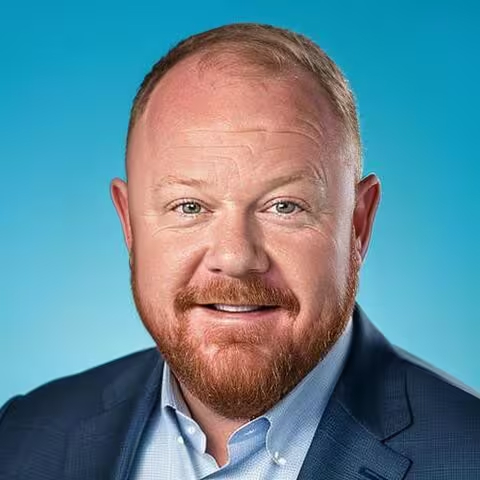
Charley Dehoney has spent over two decades in transportation and logistics. He started in door-to-door sales, built and sold bootstrap freight businesses, helped scale venture-backed startups like Cargomatic and Airspace, and ran corporate innovation for one of the world's largest steamship lines. Along the way, he kept running into the same problem: getting paid.
In this episode, Charley explains why invoicing and accounts receivable remain one of freight's most underestimated bottlenecks. He breaks down what he learned working with the industry's largest freight audit and payment companies, why shippers and carriers are both struggling with the same broken process, and how Upwell is using AI to fix it. If you run a brokerage or carrier operation and have ever watched cash sit in limbo because of a missing BOL or a rejected invoice, this one's for you.
Freight brokers and carriers obsess over winning loads, covering freight, and keeping shippers happy. But the invoice is where the transaction actually closes. And for most companies, invoicing is still a mess.
Charley estimates that about 40% of invoices coming out of a TMS need human intervention before they can be submitted to a payer. Missing documents. Wrong reference numbers. Incomplete accessorial charges. These small errors create delays that stack up across hundreds or thousands of loads.
The cost is not just time. It is working capital. If invoices sit in exception queues, cash does not move. And in freight, cash flow is oxygen.
After spending time with the largest freight audit and payment companies in North America, Charley identified the same three issues showing up over and over again. Missing or incomplete information on the invoice. Missing documentation attached to the invoice. Or the shipper simply never received the invoice.
These are not edge cases. They are the norm. And they apply across modes: trucking, rail, ocean, barge. The specifics vary, but the root causes are consistent. Fixing them requires catching errors before the invoice goes out, not chasing exceptions after the fact.
For years, back office roles were filled by tenured employees who understood shipper relationships, billing quirks, and the flow of funds. Those workers are aging out. And the people replacing them are not looking to hire more bodies. They are looking for automation.
Charley describes a shift in who holds the CFO and controller titles at logistics companies. They are younger. They expect software to solve problems. And they are not willing to scale headcount just to handle billing complexity.
This creates an opportunity for companies like Upwell. But it also creates pressure. If a carrier wants to take on new business with unique billing requirements, they either need to staff up or find a partner who has already solved that problem.
Most large shippers no longer have in-house accounts payable teams handling freight invoices. They use third-party freight audit and pay companies like Cass, US Bank, or Trax. Or they route invoices through procurement platforms like Coupa.
This means the person reviewing your invoice is not someone you can call and smooth things over with. It is a system. And that system has rules. If your first pass approval rate drops below 96 or 97 percent, you are flagged. If you keep sending bad invoices, you become a problem account.
Charley points out that billing issues are different from service issues. You can recover from a late delivery with a phone call or a round of golf. You cannot recover from being labeled as a vendor who overcharges or submits bad invoices. That reputation sticks.
Upwell's approach is to catch invoice problems before they leave the building. Their system ingests documents, matches them to the right transaction, and audits them against the payer's specific requirements. Nike wants one thing. Walmart wants another. The system knows what each shipper expects and flags anything that does not match.
This is not just OCR and extraction. It is validation. Is this the right BOL for this load? Are the reference numbers correct? Is the rate accurate? If the answer is yes across the board, the invoice goes out clean. If not, it gets fixed before anyone has to chase it.
The result is fewer exceptions, faster payment, and less time spent on rework. For carriers trying to grow without adding back office staff, that is the unlock.
Upwell now has over 90,000 unique shippers in their system. Each one has its own billing requirements, document expectations, and approval workflows. That catalog is not something a carrier can build on their own. It is institutional knowledge encoded in software.
Charley describes this as the real value of working with a platform like Upwell. When a carrier wins new business with complex billing requirements, Upwell likely already has those requirements on file. The carrier does not need to figure it out from scratch or hire someone who knows the account. They just turn it on.
This is the difference between scaling revenue and scaling headcount. One is leverage. The other is overhead.
[00:00:00] Charley Dehoney: I've always felt the intimate connection between accounts receivable and operating capital. As a founder and an entrepreneur, if your customers aren't paying you on time, then you're not paying anybody else on time. Seeing companies like steamship lines and railroads and large trucking companies, and even barge businesses struggling with the same mechanics on the billing and invoicing side, that's when I knew that there was a business to be built.
[00:00:21] Andrew Verboncouer: Hey everyone, welcome to This Side Up where we dig deep into the minds of founders. Builders and operators reshaping the future of logistics and supply chain. Today I'm joined by Charley Dehoney, CEO, and co-founder of Upwell, a longtime logistics operator and entrepreneur whose path has taken him from door-to-door sales and freight brokerage to venture-backed freight tech and corporate.
[00:00:41] Andrew Verboncouer: Innovation. So in this episode we'll talk about Charley's path through the logistics and entrepreneurship journey, the football lessons that really shaped how he leads, competes and builds teams, and really I think why he's won so many times in his career. We'll also talk about why invoicing and payments are one of freight's biggest hidden challenges.
[00:00:59] Andrew Verboncouer: We'll also talk a little bit more about how Upwell is using AI to help logistics companies get paid faster and scale without really growing the back office. So it's a great conversation about grit, leadership, operational pain points, and why the future of freight's not just about moving loads faster, but getting the financial workflows right to, let's dive in.
[00:01:17] Charley Dehoney: I've been in transportation logistics now for. 23 years, I started my career going door to door, selling overnight shipping for the company that is now the Worldwide Express Group. And after working my way up the corporate ladder at Worldwide Express, I got off on my own and I built and sold a couple of Bootstrap logistics companies before getting involved in a number of venture backed operations like Cargomatic, ship Hawk, and Airspace.
[00:01:41] Charley Dehoney: After that, I went on to. Buy and turn around a 50-year-old truck brokerage business before going to work for some of the world's largest logistics companies in corporate innovation. And it was while I was, uh, discovering all the problems that existed inside of large transportation logistics businesses, is when I really got conviction around building Upwell.
[00:02:00] Charley Dehoney: The main reason is, is I've always felt the intimate connection between accounts receivable and operating capital. As a founder and an entrepreneur, if your customers aren't paying you on time, then you're not paying anybody else on time. So I've always, I've always felt that, but seeing companies like steamship lines and railroads and large trucking companies, and even barge businesses struggling with the same mechanics on the billing and invoicing side, that's when I knew that there was a business to be built.
[00:02:23] Charley Dehoney: So, very happy to be in the logistics industry and, and really nowhere else. I'd rather be spending my career.
[00:02:29] Andrew Verboncouer: Yeah. Thanks so much for joining Charley. I really appreciate it. Excited to dig in and some nuggets there. I didn't, not, I didn't, uh, you know, you can't get from LinkedIn or online, but tell me about door to door sales at Worldwide Express, you know, prior to the internet, you know, smiling dial, showing up.
[00:02:44] Andrew Verboncouer: Tell me more about that. Like how was it getting started in that and maybe compare that to the world today of outbound and inbound and I'm sure all the things you get as a CEO.
[00:02:54] Charley Dehoney: Yeah, it was a different world. I grew up with my dad telling me my entire life that I was gonna go into sales, but I thought, well, sure I could do better than that.
[00:03:01] Charley Dehoney: Despite him being a third generation salesman and then me now being a fourth generation salesperson, I thought that there was a better path for me. And so I played college football at the division one level and graduated from San Jose State in 2003. So for context, the internet was very much around, but companies like eBay and Amazon were just becoming household names.
[00:03:19] Charley Dehoney: So e-commerce was really starting to drive logistics and at that time, logistics really wasn't even much of a term. It was shipping or trucking or transportation. And then,
[00:03:28] Andrew Verboncouer: yeah,
[00:03:28] Charley Dehoney: ultimately turned into logistics. Amazon made it sexy and then supply chain. But yeah, before the degree of data that's out there and available now, we used to get just a geographically protected territory, and we would go out and your manager would have a big, uh, map on the wall and say, Hey, here's your territory.
[00:03:46] Charley Dehoney: And that map correlated to a, a. Book that old guys like me remember, called a Thomas Guide. And the Thomas Guide was a a map book that every city in America was kind of organized in the same way in these books. And so you would generally get a Thomas guide on your first day, and your job would be to go out into the territory and drive up and down the streets and go in and out of every business and qualify the leads looking for.
[00:04:09] Charley Dehoney: Folks that were using FedEx or UPS and trying to get them to switch over to originally Airborne Express and then eventually DHL acquired Airborne. But it was an amazing opportunity to get a ton of experience pitching, you know, you're selling to business owners and CFOs in the small business realm. And what I would say is that early in my career, I really traded.
[00:04:28] Charley Dehoney: My personal life for focus on, on my career and the opportunity to kind of get good at what I did and move up.
[00:04:34] Andrew Verboncouer: Yeah.
[00:04:34] Charley Dehoney: And it wasn't long before a lot of my friends were interested in what I did, and they thought, wow, I'd love to have your job. But the bottom line is, is none of them would've taken the job that I took going door to door selling, um, right at school.
[00:04:46] Charley Dehoney: But I wouldn't trade that for anything.
[00:04:48] Andrew Verboncouer: Yeah. I mean, it's those foundational things that you can't replace that ultimately get you into doors you couldn't open before. Right. I think, I mean, it's always interesting and I didn't, uh, the, the D one athletics thing is interesting and I think we went to school similar times.
[00:05:01] Andrew Verboncouer: I graduated in oh eight, but played division two ball, I guess. Talk a little bit about how sports at that level played into business today, and obviously being willing to jump into door to door sales and then from there build upon all the successes that you mentioned in chip, pargo, uh, chip hop, cargomatic, bootstrap, those sorts of things.
[00:05:20] Andrew Verboncouer: You know, what's it like going from that team environment to. Hey, I'm solo and now I'm gonna work on building something bigger than me.
[00:05:28] Charley Dehoney: Foundationally. A lot of who I am today was shaped through middle school, high school and college and, and really being an athlete and growing up baseball was always my favorite sport.
[00:05:38] Charley Dehoney: But if you've met me in person, which you have, you know, that I was, I was built more to be a football player. And so I was very fortunate to have been gifted this body that allowed me to get big enough even to go out and do that. But what I would say was more so than being a division one athlete, I was an offensive lineman.
[00:05:53] Charley Dehoney: And so as an offensive lineman, it's a very selfless position where your entire reason for being is to create opportunities for the folks behind you that are gonna get more glamor. And I think that was ultimately what helped me become very well suited to become a leader in business. I was a good individual contributor.
[00:06:12] Charley Dehoney: I was among the top producers at Worldwide Express and was always very competitive in the sales arena. But what WORLDWIDE did was gave me the opportunity to kind of move up very quickly. And build a team of, of folks underneath me. And that was really when I started to see what leverage looked like in business.
[00:06:29] Charley Dehoney: And that, you know, the things that used to frustrate me about business didn't frustrate me as much when I was teaching other people how to deal with them. 'cause I like to tell people work, work never sucks is bad when somebody else is doing it. When you're just helping them kind of achieve the objectives.
[00:06:42] Charley Dehoney: And so I would say that being an offensive lineman and, and playing division one college football and knowing that, hey, there's a process to everything. I really need it. Program like Worldwide Express and in those days the current CEO Tom INE was involved in the sales leadership organization and the original founder chairman of the company, David Coer, was still leading the business.
[00:07:02] Charley Dehoney: There was a guy named Joe Judson, who was really the juggernaut of the entire company that built our sales framework and our go-to-market playbook. And then I was randomly, uh, worked for. Eventually worked for the co-founder of Whirlwind Express. So I, I had all these amazing entrepreneurs around me that believed in me in my early twenties that gave me the opportunity to become a key holder and, and ultimately an equity owner in these small franchises, which kind of got me off on my entrepreneurial journey, but waking up early, doing things when nobody else was.
[00:07:29] Charley Dehoney: Was watching, tracking yourself, managing your time, governing your own outputs to try to get the right outcomes. Those are all the things that you really have to be able to do to just get through college sports. And the last thing I'll say is, um, I've now got a sophomore in high school. My oldest son is, you know, still among my favorite people in the world.
[00:07:47] Charley Dehoney: And, and. At 16, he doesn't speak to me as much as he used to, and so I really value the times that he opens up. And he was just flabbergasted the other day, and you'll appreciate this, playing some college sports that he goes to this, this competitive Catholic private school here in town. And he goes, dad, you know, if all these kids that went and played, you know, D 1D two last year from our school.
[00:08:07] Charley Dehoney: Only one of them is still doing it. Everybody else came home, they're just going to school at Lincoln or they're living back with their parents. I said, buddy, everybody wants to quit. You know, everybody going through that process wants to quit at least once, if not a lot more. And so I shared with him some of the inflection points in my life.
[00:08:23] Charley Dehoney: When I was at high school, I thought all I wanted to do was, you know, make varsity. And then my first year starting on varsity, being an all league type player, I still didn't wanna play. There was days where. Didn't want to do it, but you know, once it becomes part of your identity and it's kind of who you are and it's all of your friends, and it's what people kind of view you as, then it becomes a really big trade off of, of,
[00:08:42] Andrew Verboncouer: yeah.
[00:08:42] Charley Dehoney: And this game is gone. What am I going to have? And for me, if. That gave way to Worldwide Express. Worldwide Express had this amazing training program where you'd go out to Dallas. I was in a room with 60 other people that were all entry-level salespeople. So there was a lot of comradery. And then you also got really comfortable with the death and dying part of sales where, you know, 30 days in half of those people aren't there anymore, and you're like, holy cow.
[00:09:04] Charley Dehoney: But some of the people that I kind of came up in that sales organization with and pushed myself against were also athletes. So I think having those like weak. Stack rankings and the, the weekly calls, like it really kind of felt like being a, a college football player where on Monday I kind of knew what my Monday would look like and it just, it just gave me a really good opportunity to step into something just like football that was bigger than myself, be a part of a team, but still contributed individually.
[00:09:28] Andrew Verboncouer: Yeah. Yeah. I love that. I mean, I, I so much of, to your point as well, like I. So much of who I am is because of football and because of the, the struggles there and the journey there. And like small town high school, we were three and seven my senior year. I was one of 10 seniors, right? Like, so not heavily recruited.
[00:09:46] Andrew Verboncouer: Walked on to a D two, you know, school at Winona State. And like same thing, like every day you gotta show up and. The coach isn't gonna tell you exactly what you need to do. You have that self accountability and you go through those battles in your head. And I think the same thing's in business, right? You get somewhere and there's politics in everything, right?
[00:10:04] Andrew Verboncouer: There's people who have tenure who are there and things aren't as clear when it comes to performance and they might get the role and you don't get it. And you know, those sorts of things is like, who are you as a person when things don't go your way? I know I can put in the work and I know I can control the inputs and eventually the inputs connect to those outputs and those sorts of things.
[00:10:22] Andrew Verboncouer: You know, that sort of process is just something that unless you go through it and you have that grind, and you know, if people do like the 75 hard and things like that, that are big, that maybe our athletes or aren't, but like you learn so much about yourself and that like if I just make a commitment to myself and decide.
[00:10:37] Andrew Verboncouer: I can do greater things than feeling like I'm comfortable and not wanting to, you know, you just get in a lull, you get in your own head and it's easy to walk away from anything, whether that be a startup, whether that be tech, whether that be a relationship, anything, you know, and, and so yeah, it's so, so good to hear about your background and I think just, you know, speaks volumes to probably the team that you're building.
[00:10:58] Andrew Verboncouer: I met a few of the Upwell folks at a few different conferences over the past year or two, and so. Everyone's been great, but I'm, I'm sure the culture there is really reflective of that sort of mindset and growth and like, Hey, you have to take ownership and accountability, but there'll also be opportunities where.
[00:11:13] Andrew Verboncouer: We all win together and we all rise together and, and those sorts of things, so absolutely love that.
[00:11:19] Voiceover: Today's episode of This Side Up is brought to you by Inter Mode a software consultancy. Doesn't it feel like everyone in logistics is trying to figure out how to design and build great software just to stay competitive?
[00:11:32] Voiceover: But how do you make it happen if you don't have the right talent? On your current team? Well, that's where Intermod comes in. We're the folks who help both startups and industry giants bring their tech dreams to life. Within logistics and supply chain, we don't just give you a strategy to follow. We execute with you by designing beautiful interfaces, building scalable design systems.
[00:11:55] Voiceover: And bringing Silicon Valley level engineers to build it right the first time. Whether you're a new player with a bold idea or an established company looking to modernize your systems, we've got your back. We've actually worked with some names You might recognize Ford, Proctor and Gamble, Trimble breakthrough US Venture and more helping them tackle their biggest tech challenges.
[00:12:19] Voiceover: Here's the thing, no matter how big or small your project is. We're all about turning your vision into reality. Wanna see what we can do for your business? Just head over to inter mode is inter mode making ship happen.
[00:12:35] Andrew Verboncouer: Thinking about, you know, n you talked about payments in the intro. Of all things that you've been exposed to across this journey, why payments, right?
[00:12:42] Andrew Verboncouer: There's a lot of fragmentation in the industry. Why are payments really at the heart of, I guess, logistics?
[00:12:49] Charley Dehoney: Awesome question. I think the reality is, is just the fact that you asked that question exposes the natural thought progression for US brokers. I consider myself a reformed freight broker. I think I found my way into freight brokerage because I loved all of the things about being a freight broker.
[00:13:03] Charley Dehoney: I loved, yeah, going and winning the shipper's trust and then going out and earning the business over a course of several transactions and exceeding expectations and being in front of the shipper, being in front of the team, rallying people around the problem, getting through those, those barriers. That's why we all get into freight.
[00:13:20] Charley Dehoney: We don't get into freight because we nailed finance and we were accounting majors like none of us were. Now, I mean, some, some were, but for the most part, most freight brokers that you know are the front of the house, hard charging. They're not the most analytical people. And I would put myself in that category.
[00:13:36] Charley Dehoney: And going back to 2007 when I was winding down my time at Worldwide Express, and I knew that there was probably something else coming for me. I really wanted to start a software company. I was right in the heart of the Silicon Valley when I graduated. I went there specific. Hoping to break into tech and when there was no tech roles available during the.com bust, it was like, okay, well I gotta go line up like every other schmuck and get a job.
[00:13:56] Charley Dehoney: And I interviewed with a DP Paychex, Gallo Wines at anywhere that had a entry Pitney Bowes entry level sales training program. I was on it and I landed with Worldwide Express because. The guy that recruited me had just moved out to Sacramento to open a brand new office. He had played D one Cook College football at University of Minnesota, and he worked his way through the sales program.
[00:14:17] Charley Dehoney: And so I just thought, I can see myself here, like this would work, but while I was there, TMS became a thing. People had not been using transportation management software in a meaningful way. So going back to your original question, why payments is, I wanted to start a tech company back then, I had a couple hundred thousand bucks saved up and I thought I could go bootstrap.
[00:14:34] Charley Dehoney: Something like, it was so naive, right? Mm-hmm. But at that time, venture capital wasn't flowing. It was the full kind of economic meltdown. And in fact, when I resigned from worldwide, the first two months I spent doing market research was really googling TMS companies and looking at MercuryGate going, I can't compete with them.
[00:14:49] Charley Dehoney: Yeah. And so, you know, I never saw what, what Tim's done in Ascend or what Brad did at Swan Leap. I didn't see that coming, that you could go build a big nice TMS company on the cloud and bootstrap it. But anyways, so I've wanted to start a tech company in this space for so many years. And then really when Uber was coming into the space, I knew that was gonna change trucking logistics, but I didn't know how to raise money.
[00:15:07] Charley Dehoney: I didn't know how to build technology. And so as the universe generally happens, grace of God, a friend calls and says, Hey, I've just built this app and we need somebody to help us with the go-to-market. And that company became Cargomatic, and so I got to go learn. With the two co-founders in the same apartment where the idea was was hatched and I got to work side by side with them and then I realized I was good at that.
[00:15:25] Charley Dehoney: So then I went and I did Ship Hawk and then finally co-founded airspace. And on that journey I realized that I can really move the needle when there's a technology that I'm excited about because I've built their connections and the trust and the industry to go get it in front of the right people and I can help these smoke.
[00:15:39] Charley Dehoney: Scale. So it was really while I was working at the steamship line, C-M-A-C-G-M group, and I saw that these billing issues were persistent across all modes of transportation shippers, made it very difficult to get paid, and I knew inherently it was because of the same things that I dealt with to getting paid in my shippers in my first brokerage, missing or incomplete information on the invoice, or there was missing documentation on the invoice or the shipper never got the invoice.
[00:16:02] Charley Dehoney: Those are the same three things that prevent bills from getting paid. So as I dug into that process, I realized, man, the entire transaction comes down to this payment. I used to have a mentor that used to say to me, Hey, none of us need any more practice in this business. Meaning I don't wanna book a load and not have the freight move.
[00:16:19] Charley Dehoney: Right? Like if I can't cut. Well, at the end, I don't want to, I don't want to get involved in the opportunities, right? It's like we're all doing this to get paid, and in the end, the payment hasn't gotten any easier. In fact, with automation and ai, it's gotten harder because now the shippers are all using payment portals and they're all using some sort of way to ingest those invoices and approve them or deny them.
[00:16:40] Charley Dehoney: And when they deny them, they don't really deny them. They kind of put them in this separate queue that makes it a little bit more opaque. And so as I really started to unpack this, I realized that the payers. The big freight audit and pay portals like Cass, US Bank, Williams, and Associates, they don't wanna hold your money.
[00:16:54] Charley Dehoney: Uber Freight does not wanna hold your payment. They're not making money on the float like everybody thinks they are. They're not ADP or Paychex, the payroll company, their payment companies, they make a small transaction fee for cutting that payment. And guess what? If they make a mistake. They own that payment.
[00:17:09] Charley Dehoney: Yeah. And so if they pay the carrier inaccurately or incorrectly, you have to do thousands and thousands of accurate transactions to make your money back on one mistake in that business. So as I really got to understand their business, I realized these invoices are problematic on both sides. It's hard for the.
[00:17:23] Charley Dehoney: For the biller, the logistics company to get that bill out the door. And it's hard for the payer to get that bill in the door and look at it. So then I started realizing the back office of the broker and the carrier is the front office of the payer, or which is the shipper. So I knew there was an opportunity to bridge that.
[00:17:38] Charley Dehoney: And so as I started to really dissect the industry and, and look at it, this is in, uh, August of 2022, when I kind of had my epiphany, my aha moment. Eventually worked up the courage to tell my wife about this idea. 'cause I'd promised her I'd never start another business, but which she's much more financially minded than me.
[00:17:55] Charley Dehoney: So the idea resonated with her and I started to get to work on it. And then chat. PT three came out, became commercially available. That's when I knew AI is here to solve this problem. Yeah. I just want to be the, brings the AI into the industry and gets this one little workflow from the time the freight is delivered till the time the cash is in the bank, help with that little stream.
[00:18:13] Charley Dehoney: And that's really where we're focused and what we're doing.
[00:18:16] Andrew Verboncouer: Yeah. Well, I mean, you said a lot there in just the experience built up over time. Right, but not the, the experience, the relationships, the proof, the. You know, trust in us small enough to do something once and then grow business together. And I think that's just how, that's how this industry is.
[00:18:32] Andrew Verboncouer: That's how a lot of industries are, where you prove your time, time or yourself time and time again and really build that up and, you know, get the opportunity to, to solve different problems of the stack over time. And so kudos to you and the team. And so you mentioned, um, kind of that goes from the time the shipment's delivered to the time the money's in the bank.
[00:18:51] Andrew Verboncouer: Talk specifically about where Upwell is today and then maybe where you see Upwell going in the near future here.
[00:18:57] Charley Dehoney: The idea was not to build order to cash automation for the industry, but when I really started zooming out and thinking about what held up payments, it's that all of these shippers have their own unique standards that they're gonna pay a bill to, and Nike needs something on the bill that IBM, or Walmart would never ask for.
[00:19:13] Charley Dehoney: And vice versa. Yeah. So, when I started to think about how do you eliminate the inefficiency in that process, it's, well, everybody's gotta be singing off the same sheet of music. Everybody has to be working off the same standards and looking at the same information. So I was fortunate to know the CEO of CAS Bank, the biggest payer of invoices in North America with 70 billion a year in freight under management.
[00:19:34] Charley Dehoney: Nobody sees more invoices than they do, and so I reached out to the CEO in the earliest days and I said if I wanted to make the global exchange for all supply chain payments in the industry, how would I do that? And so we, I went to St. Louis. We whiteboarded out a workflow map that showed if everybody had these rules to pay off of.
[00:19:58] Charley Dehoney: And everybody would sign off on these rules and use those as the standard. Then every time a milestone was achieved, everybody could review that part of the transaction and payment could be released. And so in 2022, people were still talking about blockchain a lot. And so we kind of agreed that blockchain could be a, a really great ledger for a transaction like that.
[00:20:15] Charley Dehoney: And so really when we started to think if that's what you want to be is the good housekeeping symbol for all trustworthy invoices in the world. Yeah. So everybody will trust it and remit payment off of it. How do you start? And the idea was that you've gotta start by getting in that workflow and using AI to replace the humans.
[00:20:33] Charley Dehoney: And what I didn't see happening, Andrew, was that the humans were already leaving the industry. Like the baby boomers who are generally your back office people, the more senior people been in the organization for a while, that have sort of contextual understanding of these relationships and the flow of funds.
[00:20:49] Charley Dehoney: So as, as we started putting out products. We started realizing that as folks were aging out of the workforce, the. CFOs and controllers were closer to your age than they were somebody in their, their sixties or seventies. Yeah. And so they weren't going out and replacing these workers with workers. They were looking for automation and solutions.
[00:21:11] Charley Dehoney: And so I think that's really started to accelerate our. Adoption in the industry is the changing guard of the decision makers, the aging population in the workforce, and the fact that everybody's looking for AI enabled solutions. But really what we're doing now is we work with, from the time the freight gets delivered, we can bring in all those documents.
[00:21:30] Charley Dehoney: Tell you what documents it's for. Put the documents where they need to go on the transaction, but better than anybody else's. We can audit those documents to the payer standard so we know if it's a bill of lading, but what if it's a bill of lading for the wrong transaction or the driver sending the wrong one?
[00:21:43] Charley Dehoney: We can match up all those identifiers so we can approve the payment. The billing out to the receivable, and we can generate the invoice packet, deliver the invoice, wherever it needs to go, whatever format it needs to go in. That's a big lift because about 40% of the invoices that come out of A TMS need to touch human hands before they get into the payer's possession.
[00:22:00] Charley Dehoney: So we eliminate all that upfront kind of manual work. And then we can reduce the days to pay by just getting rid of that white space and getting the bills audited before they go out. So before we push out that invoice, we're gonna make sure that everything's accurate, complete, and thorough. So there's less exceptions, you know?
[00:22:17] Charley Dehoney: So the, the best way to get paid on time is send a complete and accurate and thorough invoice. And if the invoice never gets rejected, then most of the time you're gonna get paid on time.
[00:22:27] Andrew Verboncouer: Yeah. Yeah, I mean it's like anything like that cost of delay, a stack of invoices, a stack of work for someone to do, sitting somewhere else that needs to be, you know, handed off to somebody else in a workflow.
[00:22:38] Andrew Verboncouer: Like that's true money, whether that's interest fees or something you're doing if you're, you know, forcing companies across the board to get lines of credit. Things like that, where if you don't have to deal with that and you can, you know, turn to something like up, well. You can get paid when you're supposed to and keep things rolling.
[00:22:55] Andrew Verboncouer: You know, I think so. Our, our parent company Headway works across different industries and one of the things that always is interesting is like smaller general contractors act as a broker for their other service providers in like the construction industry, right? And so a lot of times, like your small mom and pop local folks will borrow money from Paul to pay Peter, and that's their whole business model.
[00:23:16] Andrew Verboncouer: And it works out eventually, but if things go wrong or sideways or other things like. I dunno how people run a company that way. And I'm assuming in somewhere in freight some of that same stuff sort of happens, especially in, in brokerages. And so if you can't account for all the pieces, you try to figure it out as you can and not a great way, I'm sure.
[00:23:35] Andrew Verboncouer: To, to uh, to. To live day to day, definitely stressful. I, I would imagine when you think about, you know, where things are going now, like obviously AI can help automate the matching of those transactions, the, you know, ability to get all the data that otherwise would take a ton of time or a ton of integrations or a ton of things in order to have those complete invoices and that kind of audit trail that sometimes folks need.
[00:23:59] Andrew Verboncouer: Where do you see. The next step function for you guys? Are you, are you going deeper into payments? Are you, yeah. Maybe talk a little bit more about that. In, in 26, 27 here.
[00:24:10] Charley Dehoney: Yeah, so I think there's a few directions, you know, we can go that, that we get. Uh, invited conversationally into certainly we get a lot of opportunities and offers to go into the, the payment space and, and actually move the money.
[00:24:25] Charley Dehoney: And, you know, so far we've really drawn tight guardrails around helping, helping logistics companies get paid faster. And so to move horizontally down the workflow on, on the finance stack, not entirely sure that's the direction we'd like to go. And I think the main reason is, is because as we get closer to the shippers.
[00:24:44] Charley Dehoney: You know, in our evolution, I mentioned kind of before I even started the company in earnest, sitting down with folks like Cass, I spent a lot of time with US Bank Williams and Associates Audit and Associates tracks, Uber Freight, the folks that are managing and, and in auditing a critical mass of invoices.
[00:24:59] Charley Dehoney: And really what I realized is those folks are just our connection to the shipper. When I go to cas, they've got 150 shippers that they invoice for nationally. You know, I've got one connection in the cas and I can kind of like bill 150 of those shippers with their own unique standards. So I've been spending a lot more time with shippers lately, understanding their pain points, understanding their, uh, initiatives and, and what they want.
[00:25:24] Charley Dehoney: Shippers, like largely I think driven by freight waves. You have to give, I give them a lot of credit. I think within the past, you know, seven years, they've created this awareness around becoming that shipper of choice and becoming a more valuable shipper, providing more data around dwell times.
[00:25:40] Charley Dehoney: Inefficiencies, yeah. And really shining the light on who's a good partner and who's not. And I think that has driven more, you know, more sort of behavior on the. The shipper's side to want to be efficient. The other thing is the shippers don't have an AP department anymore. They're using Coupa, or they're using an auditor to be their AP department, so they don't have people on the other end to deal with these exceptions E either.
[00:26:04] Charley Dehoney: So if you don't have a first pass approval score and FPA score of about 96, 90 7%, if you get over the 4% rejection rate, that's like an auto. You know, trip principal's office, and if you think about it, and the trucking business is already hard enough as it is to pick up and deliver the freight and move it on time, if you start messing up the invoice too.
[00:26:25] Charley Dehoney: Now, I, I, going back to my days of selling transportation, I always felt like if I blew a shipment or something got delivered late, I could go get in front of the warehouse guy, the traffic guy. I could go take the, the head of supply chain golfing or buy his kid a baseball bat or something to say, I'm sorry, when the back office comes out and they're like.
[00:26:43] Charley Dehoney: They're done. No. Their bill is, they're, they're overcharging us. Yeah. I mean that's like a cardinal sin, right? Yeah. Nobody wants to deal with that, has billing issues. So going back to. You know, sort of this, this entire process. We're really looking more, I think, to build deeper connections at the shipper level and create more of like a, a linear like visibility into that pipeline of, hey, yeah, we know things gonna get paid, the shipper's already approved it in their environment, all the cost matchup, and see if we could do that audit even one step further upstream.
[00:27:12] Charley Dehoney: That's what I get really excited about, because yeah, when you start talking about unlocking working capital and the cost of capital today has gone up significantly, and the cheapest money to use is the money that you have coming. That's already on its weight right now.
[00:27:25] Andrew Verboncouer: That's right, that's right. Yeah. I, I think you said it best with shippers getting very clear around dwell time and all that stuff.
[00:27:33] Andrew Verboncouer: We created a thing for agile procurement with Trimble. Right, which is now part of their freight marketplace. And so a big part of that was having shippers have that visibility for carriers that could then start to build better matches versus having the largest carriers only do it the Schneiders of the world, you know those folks.
[00:27:55] Andrew Verboncouer: Now you can have mom and pop that have really strong networks be able to connect, and you also have payment terms that are clear and you also have all the accessorials documented well, and like you have a really well-defined, visible operation that now you have more optionality versus if you don't. You need people to power that.
[00:28:11] Andrew Verboncouer: You need three people on your team to talk to Schneiders, three people on their team and they'll figure it out. But that's all manpower, man hours, all those things. If you can really start to streamline it, then you can take advantage of technology and things like Upwell. And I think part of the, the problem in.
[00:28:28] Andrew Verboncouer: In freight, in transportation as a whole. Just, I mean, no surprise data fragmentation. I think auger's trying to solve some of that I haven't seen behind the hood. Obviously we see the big, uh, you know, the big promises on stage from Dave and team and it seems, seems promising, you know, building a data garbage can, but at the same time, I think being really intentional around where you're applying AI solutions and something like Upwell is really cool.
[00:28:52] Andrew Verboncouer: And I think timely, like you said, like if that's, if that part of your business isn't accurate. In either way. Either you're losing money or, or you know, or, or you're overcharging. That doesn't feel good on e either side. You want a honest agreement and an honest transaction that happens. And so, yeah.
[00:29:09] Andrew Verboncouer: That's good to hear. Anything else that, um, that would be helpful for any of our viewers to, to know about Upwell technology wise, or,
[00:29:18] Charley Dehoney: I think, uh, you know, if there was one way that I, I would have folks think about us, if I got to write the recipe here, would be. When there's a, a growth opportunity that comes up in the business, maybe that that opportunity comes with some unique billing requirements or some complexity.
[00:29:34] Charley Dehoney: Something that feels like maybe it's gonna be prohibitive, it's gonna require us to make more investment into non-revenue producing people in the back office. Those are the types of opportunities that it makes sense to bring to Upwell. 'cause we probably already solved it for somebody else. We probably already have those billing requirements in a can somewhere that we can just.
[00:29:51] Charley Dehoney: Turn on for you and help you take on that revenue more seamlessly. And as we continue to do that and we build our, our shipper catalog now, which is 90,000 unique shippers that have paid their invoices through Upwell, that we kind of know there's their requirements and, and we can. Track their accuracy.
[00:30:08] Charley Dehoney: As we continue to grow that catalog, I wanna be able to unlock more opportunities for more carriers that are growth minded to go out and take on more freight without worrying about growing their back office. So if that's the kind of a growth plan, which I'm hearing a lot of folks are, the market feels like it's back.
[00:30:22] Charley Dehoney: I'm fresh back from TIA last week and, um, yeah, the sentiment shift from TIA tech ovations in the fall when, you know, in November 12th, the market bottomed and, and we were all fresh back from tech ovations to. Being in Scottsdale, uh, Phoenix last week with the, the community was night and day difference.
[00:30:39] Charley Dehoney: So I'm really excited to be able to help carriers scale without scaling their back office. And that's really the conversations we want to have.
[00:30:45] Andrew Verboncouer: Yeah, and that's the promise, right? Like, why try to build something like Upwell yourselves when you guys have solved it for so many shippers and, you know, those sorts of things.
[00:30:53] Andrew Verboncouer: And that's always the case that we go into with team by versus Bill, right? Like, Hey, can you find the right people? Unless you're doing payments as your company or ar as your, as your company, you shouldn't build it. And so. Yeah, definitely recommend taking a look into Upwell and what you guys are working on.
[00:31:07] Andrew Verboncouer: Where can people stay up to date with what you're doing? Obviously Upwell.com, but what about you specifically, Charley, if folks have questions?
[00:31:15] Charley Dehoney: Yeah, my, I'm on LinkedIn. Try to stay active, let everybody know what's going on. Uh, you can also find me on at Charley Dehoney at Twitter and you can find Upwell at freight bills on Twitter.
[00:31:24] Andrew Verboncouer: Awesome. Well, thank you so much. Really appreciated the insight and all the backstory on not only the business background but the football background. Always good to meet folks who, uh. Onto their head a little bit, maybe too much, so
[00:31:37] Charley Dehoney: That's
[00:31:37] Andrew Verboncouer: right. Appreciate it. Yeah. Thanks again.
[00:31:40] Charley Dehoney: Appreciate you, Andrew.
[00:31:40] Charley Dehoney: Thank you.
[00:31:41] Voiceover: Thanks for joining us on This Side Up. Don't forget to
[00:31:44] Andrew Verboncouer: subscribe, rate, and review our podcast to help others find us. If you have any questions or topics you'd like us to cover, feel free to reach out and if you want to be a guest, let's connect. Until next time, keep your shipments safe, your logistics smooth, and your curiosity on the move.
Get new episode updates and continue to grow in your role in tech and logistics.


Intermode is a modern software consultancy that helps new and ambitious challengers launch to market, and established leaders innovate into the future through software design and development.
Contact: hello@intermode.is
© 2025 Headway, LLC. All rights reserved.
Privacy Policy